The Indus Valley Civilization, one of the world's first and oldest civilizations, was located in parts of what is now Rajasthan. Kalibangan inHanumangarh district, Rajasthan was a major provincial capital of the Indus Valley Civilization. It is believed that Western Kshatrapas (405–35 BC) were Saka rulers of the western part of India (Saurashtra and Malwa: modern Gujarat, Southern Sindh, Maharashtra, Rajasthan). They were successors to the Indo-Scythians, and were contemporaneous with the Kushans who ruled the northern part of the Indian subcontinent. The Indo-Scythians invaded the area of Ujjain and establish the Saka era (with Saka calendar), marking the beginning of the long-lived Saka Western Satraps state. Matsya, a state of the Vedic civilization of India, is said to roughly corresponded to former state of Jaipur in Rajasthan, and included the whole of Alwar with portions of Bharatpur. The capital of Matsya was at Viratanagar (modern Bairat) which is said to have been named after its founder king Virata. Traditionally the Gurjars, Rajputs, Charans, Yadavs, Jats, Meenas, Bhils, Bishnois and other tribes made a great contribution in building the state of Rajasthan. All these tribes suffered great difficulties in protecting their culture and the land. Millions of them were killed trying to protect their land. A number of Gurjars had been exterminated in Bhinmal and Ajmer areas fighting with the invaders. Bhils once ruled Kota. Meenas were rulers of Bundi and Dhundhar region. Gurjars ruled many dynasties in this part of the country. In fact this region was long known as Gurjaratra. Up to the tenth century almost the whole of North India, excepting Bengal, acknowledged the supremacy of Gurjars with their seat of power at Kannauj.
The Gurjar Pratihar Empire acted as a barrier for Arab invaders from the 6th to the 11th century. The chief accomplishment of the Gurjara Pratihara empire lies in its successfully resistance to the foreign invasions from the west, starting in the days of Junaid. Historian Majumdar says that this was openly acknowledged by the Arab writers themselves. He further notes that historians of India have wondered at the slow progress of Muslim invaders in India, as compared with their rapid advance in other parts of the world. Now there seems little doubt that it was the power of the Gurjara Pratihara army that effectively barred the progress of the Muslims beyond the confines of Sindh, their first conquest for nearly three hundred years.
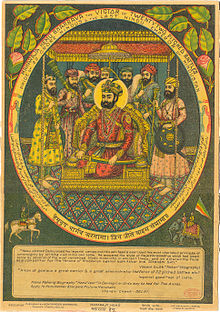
Samrat Hem Chandra Vikramaditya, the Hindu Emperor, also known as Hemu in the history of India was born in the village of Machheri in Alwar District in the year 1501. He won 22 battles against Afghans, fromPunjab to Bengal and defeated Akbar's forces twice at Agra and Delhi in 1556, before acceeding to the throne of Delhi and establishing 'Hindu Raj' in North India, albeit for a short duration, from Purana Quila in Delhi. He was killed in the Second Battle of Panipat.